

 My GIA Now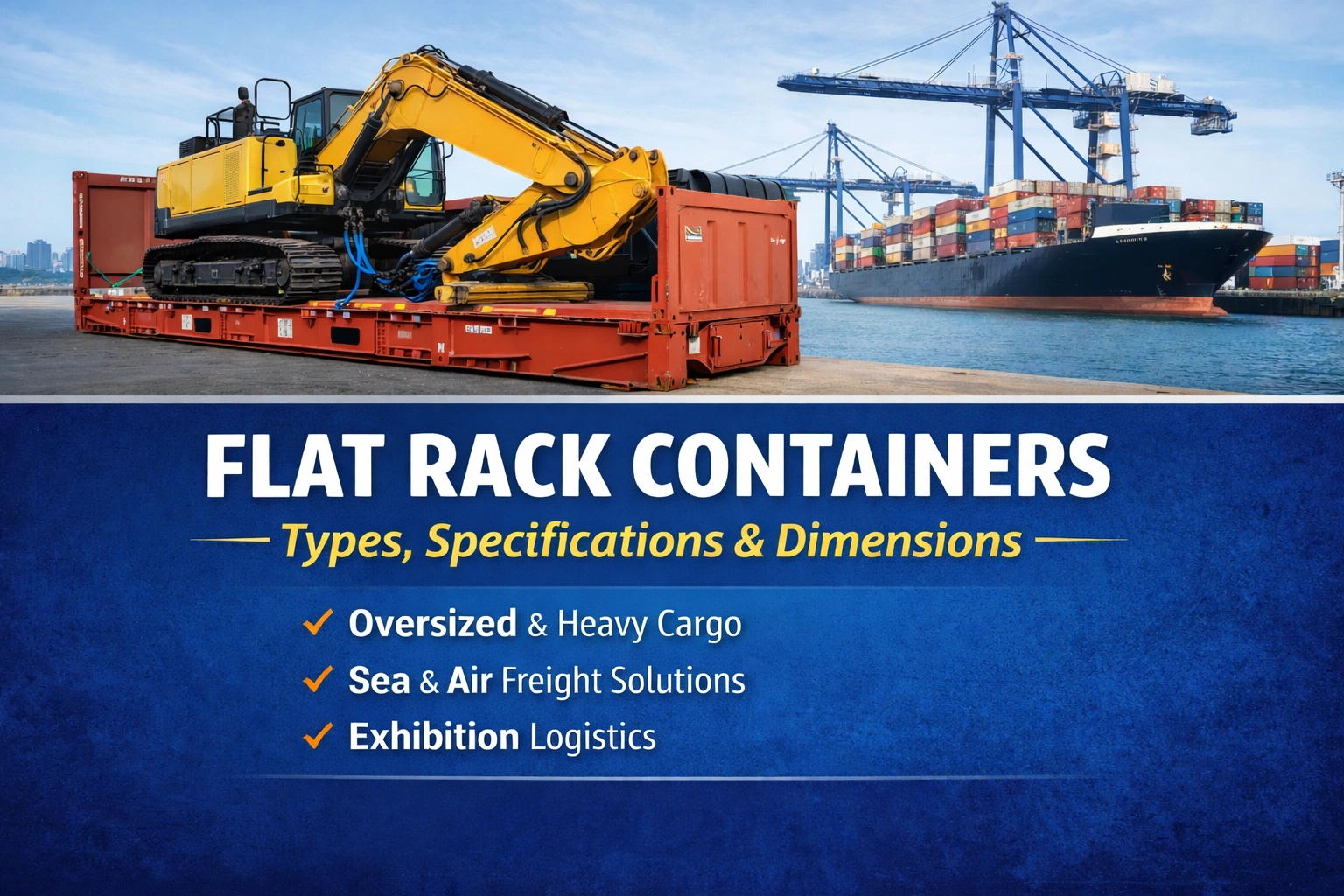
When it comes to transporting oversized, heavy, or irregular cargo, flat rack containers are one of the most reliable solutions in global logistics. At GSI Cargo, we regularly use flat rack containers for complex sea freight, air freight coordination, and exhibition logistics projects that demand precision and safety.
In this blog, we’ll break down:
- What is a flat rack container?
- Types of flat rack containers
- Specifications
- Standard dimensions
- When to use flat rack containers
- How GSI Cargo handles flat rack shipments
What Is a Flat Rack Container?
A flat rack container is a specialized shipping container designed without side walls and, in some cases, without a roof. It consists of a strong base with fixed or collapsible end walls.
It is ideal for:
- Heavy machinery
- Construction equipment
- Industrial components
- Large vehicles
- Project cargo
- Exhibition structures
Unlike standard containers, flat racks allow cargo to extend beyond the width or height of the container (subject to shipping line approvals).
Types of Flat Rack Containers
1. Fixed-End Flat Rack
Features:
- End walls are permanently fixed
- Stronger structural support
- Ideal for extremely heavy cargo
Best For:
- Transformers
- Large generators
- Steel structures
- Heavy machinery
Fixed-end flat racks offer better load-bearing capacity and are commonly used in sea freight for heavy project cargo.
2. Collapsible Flat Rack
Features:
- End walls can be folded down
- Easier storage when empty
- More flexible for logistics handling
Best For:
- Moderate oversized cargo
- One-time project shipments
- Exhibition materials
Collapsible flat racks reduce storage costs and improve repositioning efficiency.
Flat Rack Container Specifications
Here are the standard specifications generally used in international shipping:
Structural Features
- Heavy-duty steel base
- Lashing rings for cargo securing
- High load-bearing floor
- Forklift pockets (in some models)
- Stackable when loaded (depending on weight)
Load Capacity
| Container Type | Maximum Gross Weight | Payload Capacity |
|---|---|---|
| 20’ Flat Rack | ~30,000 – 34,000 kg | ~28,000 – 31,000 kg |
| 40’ Flat Rack | ~40,000 – 45,000 kg | ~38,000 – 41,000 kg |
(Exact capacity may vary depending on shipping line and manufacturer.)
Flat Rack Container Dimensions
20’ Flat Rack Container Dimensions
- External Length: 6.06 m
- External Width: 2.44 m
- External Height: 2.59 m
- Internal Length: ~5.94 m
- Internal Width: ~2.35 m
- Internal Height: ~2.35 m
40’ Flat Rack Container Dimensions
- External Length: 12.19 m
- External Width: 2.44 m
- External Height: 2.59 m
- Internal Length: ~12.03 m
- Internal Width: ~2.35 m
- Internal Height: ~2.35 m
👉 Note: Cargo can exceed height or width limits with proper over-dimensional (ODC) approvals.
When Should You Use a Flat Rack Container?
Flat racks are the best choice when:
- Cargo is too wide for a standard container
- Cargo is too tall for a high cube container
- Heavy equipment requires top loading
- Machinery cannot be dismantled
- Project cargo requires specialized handling
At GSI Cargo, we conduct a full feasibility check before recommending flat rack usage to ensure cost efficiency and compliance with port and carrier regulations.
Flat Rack in Sea Freight
Flat rack containers are most commonly used in sea freight, especially for:
- Breakbulk cargo
- Project shipments
- Infrastructure equipment
- Oil & gas components
We coordinate:
- Port handling
- Lashing & securing
- Marine survey (if required)
- Customs clearance
- International documentation
Flat Rack in Air Freight Coordination
While flat racks are used in sea freight, oversized cargo sometimes requires air freight forwarding solutions. In such cases, GSI Cargo evaluates:
- Urgency
- Cargo dimensions
- Weight distribution
- Cost implications
We provide multimodal logistics planning to ensure smooth transitions between sea and air transport if required.
Flat Rack for Exhibition Logistics
Exhibition structures, stage equipment, and large display materials often exceed normal container dimensions.
GSI Cargo specializes in:
- Temporary import/export handling
- ATA Carnet documentation
- On-site delivery coordination
- Time-sensitive shipments
Flat racks allow safe transportation of non-dismantlable exhibition materials.
Why Choose GSI Cargo for Flat Rack Shipments?
At GSI Cargo, we don’t just move cargo — we manage logistics risks.
Our Expertise Includes:
- Project cargo handling
- ODC movement planning
- Lashing and securing supervision
- Carrier negotiation
- Port-to-port and door-to-door service
- Insurance coordination
We ensure your heavy and oversized cargo reaches its destination safely and on time.
Final Thoughts
Flat rack containers are essential for transporting oversized and heavy cargo that cannot fit into standard containers. Choosing the right type, understanding specifications, and ensuring proper securing are critical to avoid damage and delays.
If you’re planning to ship heavy machinery, industrial equipment, or exhibition materials, GSI Cargo is ready to assist with reliable sea freight and air freight solutions tailored to your project.