

 My GIA Now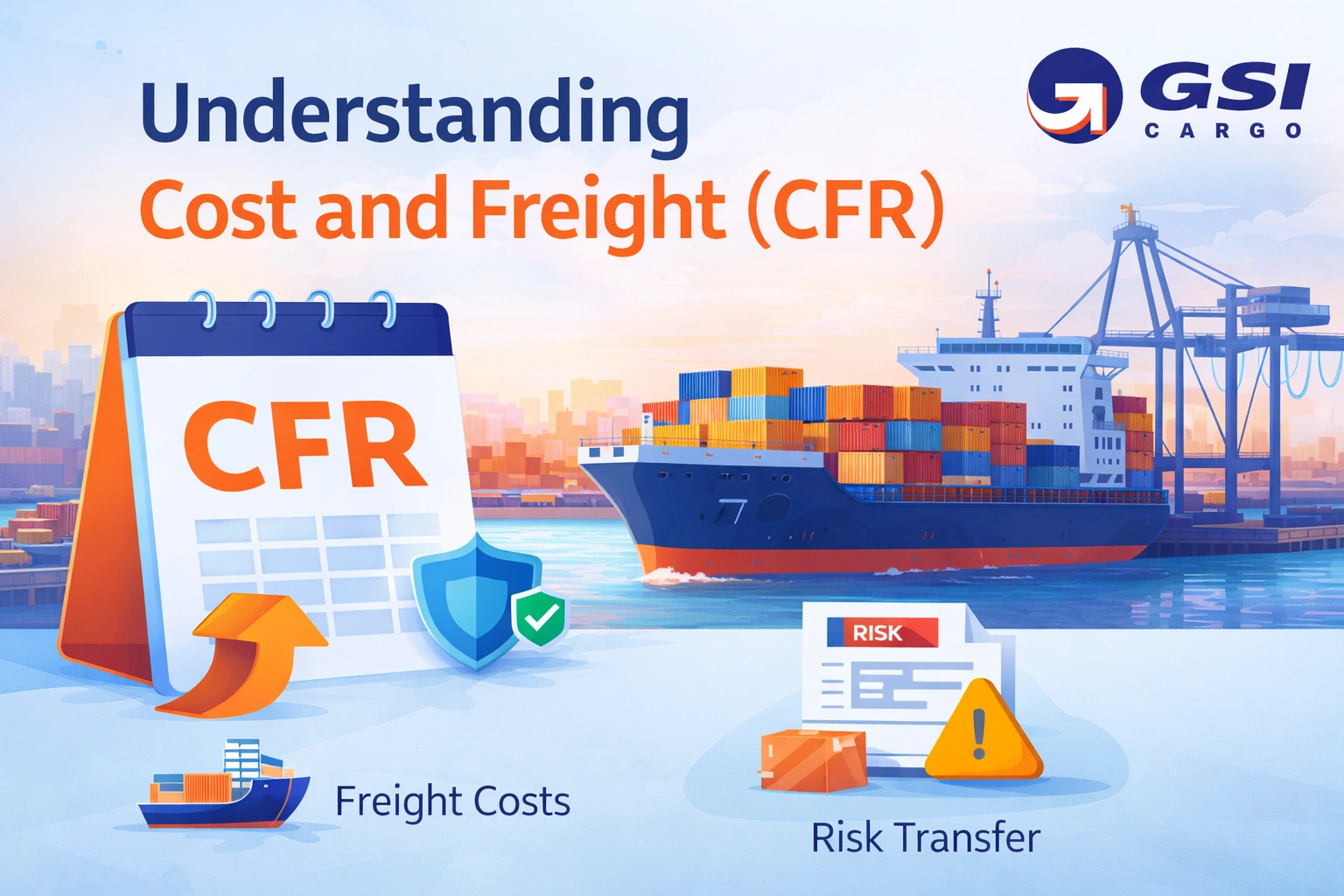
In global commerce, clarity in shipping responsibilities is essential. CFR Incoterms play a crucial role in defining how costs and risks are divided between buyers and sellers in international trade. By clearly outlining transportation obligations and risk transfer points, CFR Incoterms help businesses avoid confusion, reduce disputes, and ensure smoother cross-border transactions.
When companies understand how CFR Incoterms function, they gain better control over freight costs, shipment planning, and risk management. This clarity strengthens decision-making and builds confidence in global trade operations.
What Are CFR Incoterms?
CFR Incoterms (Cost and Freight) are international commercial terms used exclusively for sea and inland waterway transport. Under CFR Incoterms:
- The seller pays for transportation of goods to the named destination port.
- The risk transfers to the buyer once the goods are loaded onto the vessel at the origin port.
This distinction between cost responsibility and risk transfer is what defines CFR Incoterms and differentiates them from other shipping terms like CIF (Cost, Insurance, and Freight).
Key Features of CFR Incoterms
1. Risk Transfer Point
Under CFR Incoterms, risk transfers from the seller to the buyer once the goods are placed on board the shipping vessel at the origin port.
2. Freight Costs
The seller arranges and pays for freight charges to the destination port.
3. Insurance Responsibility
Unlike CIF, CFR Incoterms do not require the seller to provide insurance. The buyer must arrange insurance if protection is needed.
4. Export Clearance
The seller is responsible for handling export documentation, duties, and customs clearance at the country of origin.
Understanding these features ensures both parties know exactly where their responsibilities begin and end.
Roles and Responsibilities Under CFR Incoterms
Seller’s Obligations
Under CFR Incoterms, the seller must:
- Deliver goods on board the vessel at the agreed port of shipment
- Arrange and pay freight to the destination port
- Complete export customs clearance
- Provide shipping documents (bill of lading, invoice, etc.)
While the seller manages transportation arrangements, their risk ends once goods are loaded onto the vessel.
Buyer’s Responsibilities
Once goods are on board the vessel, the buyer must:
- Assume all transit risks
- Arrange marine insurance (if required)
- Handle import clearance and pay duties
- Organize transportation from destination port to final delivery point
Understanding these responsibilities is critical to avoiding unexpected financial exposure.
Financial Structure of CFR Incoterms
What Is Included in the CFR Price?
The price under CFR Incoterms generally includes:
- Cost of goods
- Freight charges to the destination port
- Export documentation and compliance costs
- Pre-shipment inspection (if required)
However, it does not include:
- Marine insurance
- Import duties and taxes
- Unloading charges at destination
- Inland transportation beyond the destination port
This financial division makes cost planning predictable for both parties.
Freight Prepaid Advantage
Under CFR Incoterms, freight is prepaid by the seller. This ensures:
- Smooth shipment processing
- No mid-transit freight disputes
- Clear pricing structure for buyers
Although freight is prepaid, risk still transfers at the port of shipment.
Transportation Considerations Under CFR Incoterms
Containerized Cargo
Containerized goods benefit from:
- Standardized handling
- Better cargo protection
- Efficient port operations
Non-Containerized (Bulk) Cargo
Bulk cargo may require:
- Specialized vessels
- Individual handling procedures
- Additional coordination
Since CFR Incoterms apply only to sea and inland waterway transport, they are most suitable for bulk shipments and large-scale maritime trade.
Risk Management in CFR Incoterms
One of the most critical elements of CFR Incoterms is understanding risk transfer.
When Does Risk Transfer?
Risk transfers from seller to buyer once the goods are loaded onto the vessel at the origin port. From that moment, the buyer bears responsibility for:
- Cargo damage
- Loss at sea
- Shipment delays
- Additional charges arising during transit
Even though the seller pays for freight, the buyer carries transit risk.
Importance of Insurance
Because CFR Incoterms do not require the seller to provide insurance, buyers should:
- Secure marine cargo insurance
- Ensure comprehensive coverage
- Evaluate coverage limits carefully
Failure to insure adequately may result in significant financial loss.
Why CFR Incoterms Matter in Global Trade
CFR Incoterms create a structured framework that clearly separates cost obligations from risk transfer. They are especially useful when:
- Sellers prefer to control shipping arrangements
- Buyers want transparency in freight pricing
- Both parties need clear documentation responsibilities
By defining each party’s duties precisely, CFR Incoterms reduce misunderstandings and improve trade efficiency.
Final Thoughts on CFR Incoterms
CFR Incoterms remain a cornerstone of maritime international trade. Their strength lies in clarity—clearly defining who pays for freight and when risk changes hands.
To successfully trade under CFR Incoterms, businesses should:
- Understand risk transfer timing
- Structure pricing accurately
- Ensure proper documentation
- Secure appropriate insurance coverage
When applied correctly, CFR Incoterms provide a reliable framework for cost control, operational clarity, and smoother international transactions.
Also Read : 10 Interesting Facts About Air Freight Forwarding Everyone Should Know