

 My GIA Now
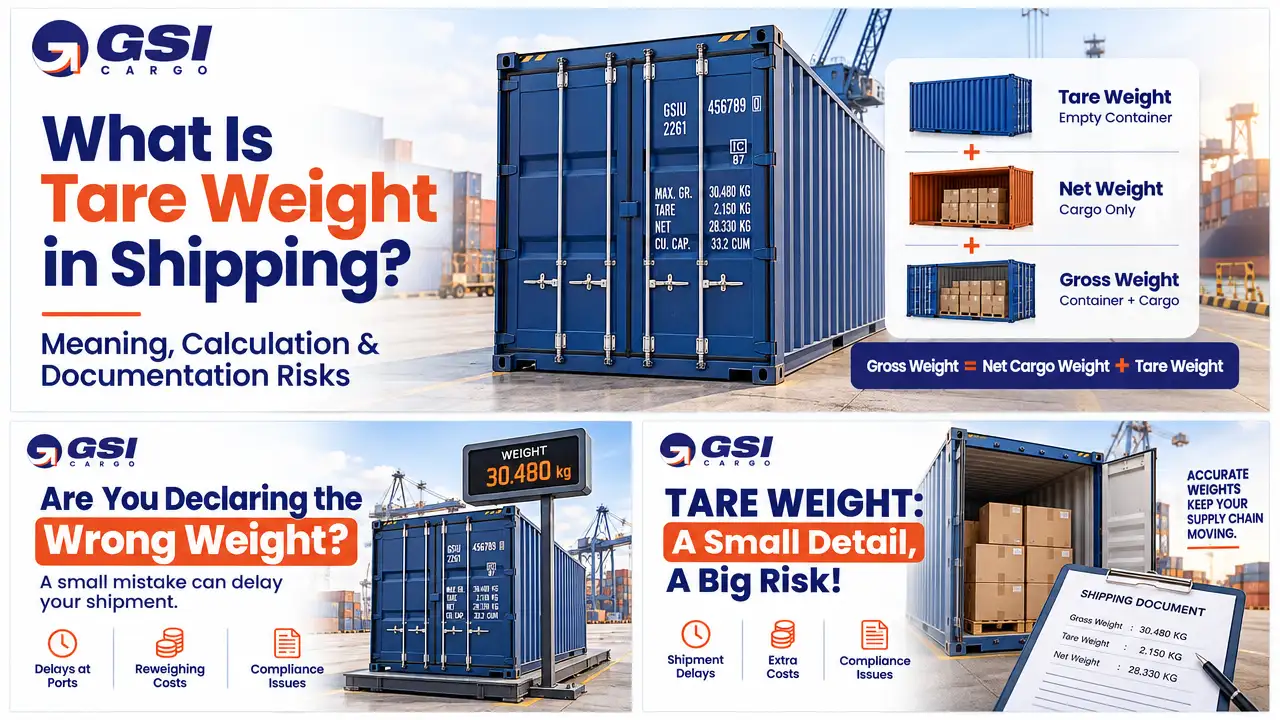
In international shipping, understanding cargo weight is essential for smooth transportation, accurate documentation, and customs compliance. One important term every beginner in the import-export business should know is Tare Weight.
At GSI Cargo Private Limited, with over 26 years of experience in international freight forwarding, we believe that understanding basic shipping terminology helps businesses avoid costly mistakes.
What Is Tare Weight?
Tare Weight is the weight of an empty container or packaging, without the cargo loaded inside it.
For example, if an empty shipping container weighs 2,200 kg and the goods loaded inside weigh 18,000 kg, the total weight becomes 20,200 kg.
Here:
- Tare Weight: 2,200 kg
Net Cargo Weight: 18,000 kg
Gross Weight: 20,200 kg
Formula: Gross Weight = Net Cargo Weight + Tare Weight
Why Is Tare Weight Important?
Tare weight plays an important role in container shipping, transport planning, weighing procedures, and the preparation of shipping documents. It helps determine the total loaded weight and supports compliance with applicable road transport and maritime safety requirements.
For ocean exports, the Verified Gross Mass (VGM) declaration is particularly important. Under SOLAS requirements, the shipper must ensure that the container’s verified gross mass is provided to the shipping line and terminal before loading onto the vessel.
What Happens If Tare Weight Is Misdeclared or Not Mentioned?
Incorrect or missing tare weight information can create confusion during cargo weighing and documentation verification. If the declared weight does not match the actual weight, it may lead to discrepancies in the VGM, delays in shipment acceptance, additional weighing costs, or other compliance issues.
However, the consequences depend on the document involved and the applicable shipping line, terminal, and regulatory requirements. Tare weight is not necessarily required as a separate field on every shipping document, so its absence alone does not automatically constitute a violation.
Expert Advice from GSI Cargo
Always verify the container’s tare weight against the container markings or reliable equipment records. Ensure that gross weight, net weight, and VGM are correctly calculated and consistently declared wherever required.
Remember: Accurate weight declaration is not just paperwork; it is an important part of safe, compliant, and efficient international trade.
For professional guidance on import-export documentation and international freight forwarding, connect with GSI Cargo Private Limited — Your Digital Freight Forwarding Partner.

