

 My GIA Now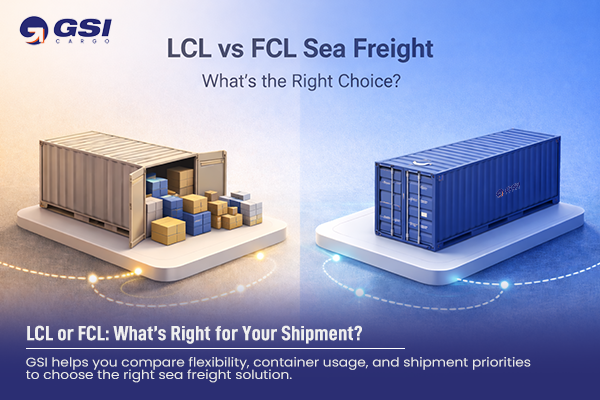
Difference Between LCL and FCL in Sea Freight: Which Option Is Better for Your Business?
In sea freight, the wrong shipping choice does more than increase cost. It can delay deliveries, create avoidable cargo risks, and disrupt your entire supply chain.
Many businesses assume choosing between LCL (Less than Container Load) and FCL (Full Container Load) is only about finding the cheaper option. In reality, the decision affects transit time, cargo handling, reliability, and customer satisfaction.
Why This Decision Matters More Than Most Businesses Realize
The right choice depends on:
- Cargo volume
- Delivery urgency
- Product type
- Budget
- Risk tolerance
A smart shipping decision protects margins. A poor one quietly eats into them.
What Is LCL in Sea Freight?
LCL (Less than Container Load) means your cargo shares container space with goods from other shippers. You only pay for the space you use, which makes it a practical option for smaller shipments.
LCL is usually suitable when:
- You do not have enough cargo to fill a full container
- You want to reduce upfront freight cost
- Your shipment timeline is flexible
- You are sending smaller or trial orders
Key advantages of LCL
- Lower initial shipping cost
- Better for low-volume cargo
- Useful for businesses testing new markets or managing smaller inventory cycles
Common disadvantages of LCL
- Longer transit time due to consolidation and deconsolidation
- More cargo handling at multiple stages
- Higher possibility of delays
- Increased exposure to damage if goods are sensitive or fragile
What Is FCL in Sea Freight?
FCL (Full Container Load) means you book an entire container for your shipment alone. Even if the container is not fully packed, it remains dedicated to your cargo.
FCL is usually suitable when:
- You have a large shipment volume
- Your cargo is time-sensitive
- Your goods are high-value, fragile, or sensitive
- You want more control over handling and movement
Key advantages of FCL
- Faster transit in many cases
- Less handling, which reduces damage risk
- Better shipment security
- More predictable movement and planning
Common disadvantages of FCL
- Higher upfront cost if container space is underutilized
- Not always ideal for very small shipments
LCL vs FCL: A Practical Comparison
| Factor | LCL | FCL |
|---|---|---|
| Cost | Better for small volumes | Better value for larger volumes |
| Transit Time | Usually slower | Usually faster |
| Cargo Handling | Multiple touchpoints | Minimal handling |
| Damage Risk | Higher | Lower |
| Flexibility | Good for small shipments | Better for planned bulk movement |
| Best For | Low-volume cargo | High-volume or time-sensitive cargo |
How GSI Cargo Helps You Choose the Right Shipping Mode
At GSI Cargo, we help businesses make smarter freight decisions based on cargo type, shipment urgency, and commercial priorities.
Our team supports you by:
- Recommending the right mode for your shipment
- Planning efficient routing
- Reducing avoidable delays and handling risks
- Coordinating customs clearance smoothly
- Providing real-time shipment visibility
Final Thoughts
There is no universal winner in the LCL vs FCL debate. The right option depends on your shipment goals.
If your priority is a lower upfront cost for smaller cargo, LCL may work. If your priority is speed, safety, and better control, FCL is often the stronger choice.
Not sure whether LCL or FCL is right for your next shipment?
Making the wrong choice can cost more than you expect.
Talk to GSI Cargo today for expert guidance on the most efficient, cost-effective, and reliable shipping solution for your business.