

 My GIA Now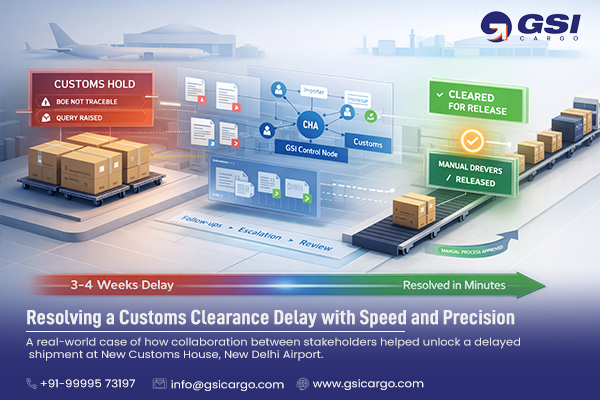
Customs holds are the silent trade show killer.
Your booth can be perfect. Flights booked. Buyer meetings confirmed.
Then one customs query turns into a delay you can’t recover from.
And here’s the part most exhibitors don’t realise until it’s too late: when your shipment is held, the clock doesn’t pause just because your exhibition date is fixed.
If you’re shipping samples, display items, prototypes, or demo equipment, this guide will help you reduce the risk of exhibition customs clearance delays and keep your exhibition cargo shipping on track for on-time booth delivery.
SEO keywords woven in: exhibition customs clearance, exhibition cargo shipping, trade show freight forwarder, exhibition logistics services, exhibition logistics India
Why Exhibition Cargo Is More Likely to Be Held
Exhibition shipments are different from regular commercial cargo. They are usually: - Temporary imports - Sample goods - Display materials - Non-commercial quantities
Customs authorities treat them carefully because: - They must not enter the local market illegally - Duties must be protected - Origin marking must be compliant - Valuation must be accurate
Under enforcement bodies such as U.S. Customs and Border Protection (and similar agencies worldwide), inspection discretion is strong.
If something looks unclear, officers will hold the shipment.
And once a shipment is held, the countdown starts: storage fees, handling charges, rework costs, and the one thing you can’t buy back setup time.
The 80/20 Rule: Most Holds Come From Predictable Mistakes
If you want the fastest way to avoid customs holds, focus on the handful of issues that trigger most inspections.
1) Improper origin marking (Made in ___)
Why it triggers holds: Every product must clearly indicate its country of origin. If “Made in ___” is missing, temporary, covered, or unreadable, customs may stop the shipment.
For exhibition samples, this becomes even more sensitive because authorities worry about unauthorised sale.
Do this instead: - Ensure origin marking is permanent and visible - Don’t cover markings with tape, shrink wrap, or packaging - Keep markings consistent across items in the same shipment
2) Missing “SAMPLE – NOT FOR RESALE” identification
Why it triggers holds: If this is missing, customs may treat the shipment as commercial inventory.
That can trigger: - Duty assessment - Additional documentation demands - Physical inspection - Delays
Do this instead: - Label cartons and key items clearly: SAMPLE – NOT FOR RESALE - Add the same wording on invoice and packing list where applicable
3) Incorrect or vague commercial invoice descriptions
Why it triggers holds: Generic descriptions like “display material” or “samples” create ambiguity.
Ambiguity creates suspicion. Suspicion creates inspection.
Do this instead: - Use precise item descriptions (material, use, model) - Include quantity, unit value, total value - Mention “for exhibition display” and “not for resale” where applicable - Clearly state: “Display Only”, “Temporary import”, “Return after exhibition” (when true)
4) HS code mismatch (or missing HS codes)
Why it triggers holds: Incorrect classification can lead to wrong duty calculation and extra scrutiny even if the goods are temporary.
Do this instead: - Assign HS codes per item line (not one code for everything) - Align HS codes across invoice, packing list, and certificates - Confirm codes with the destination customs broker
5) Valuation that doesn’t make sense
Why it triggers holds: Customs may challenge undervaluation or inconsistent pricing.
Do this instead: - Keep valuation consistent with internal records - If items are prototypes or non-sale goods, document the basis of value - Avoid “zero value” unless the destination rules explicitly allow it
6) Last-minute shipping (no buffer)
Why it triggers holds: When cargo arrives just days before the exhibition opening, even a minor inspection becomes a critical delay.
Air freight is fast but it’s not immune to inspection.
Sea freight is cost-effective but inspection delays are harder to recover from.
Do this instead: - Build buffer time into the plan (customs + venue handling) - Ship earlier than you think you need to - Treat the setup deadline as the real delivery deadline
Pre-Shipment Checklist (Do This 7–14 Days Before Pickup)
Use this checklist to reduce customs hold risk before dispatch: - Confirm whether shipment is temporary import or permanent import - Verify origin marking is permanent and visible - Add SAMPLE – NOT FOR RESALE labeling where applicable - Confirm HS codes per item line - Verify invoice descriptions are specific and consistent - Ensure packing list matches cartons, weights, and labels - Confirm serial numbers (if applicable) - Confirm the destination customs broker is pre-alerted - Confirm venue delivery rules and official handler requirements - Confirm re-export plan and return shipment method
The “Pre-Alert” Move That Saves Exhibitors
A strong trade show freight forwarder doesn’t wait for the shipment to land to start customs.
They pre-alert the destination broker with: - Documents - Item list + HS codes - Temporary import method (ATA Carnet / bond where applicable) - Special handling notes
This is where regular forwarding loses days and where exhibition logistics specialists protect your timeline.
What If Your Shipment Is Already on Hold?
Even with preparation, inspections can happen. What matters is response speed.
Do this immediately: 1. Identify the exact reason for hold (classification, valuation, marking, missing docs) 2. Respond fast with complete documentation (hours, not days) 3. Coordinate inspection scheduling right away 4. Explore corrective options (re-labeling, clarification, amendment) 5. Coordinate directly with broker and warehouse
Delays often worsen when response is slow. In exhibitions, “waiting” is a strategy that costs money.
The Cost of a Customs Hold (What It Really Hits)
A hold is not just a delay. It can mean: - Storage charges - Handling fees - Rework expenses - Missed setup windows - Brand damage
Exhibition logistics is not forgiving. Every hour counts.
The Real Difference: Prevention vs Reaction
Regular freight forwarding focuses on movement.
Exhibition logistics focuses on prevention.
At GSI Cargo (Exhibition Logistics India), exhibition shipments undergo: - Pre-dispatch compliance checks - Label verification guidance - Temporary import documentation review - Timeline risk planning - Contingency strategy preparation
Because avoiding a customs hold is always easier than resolving one.
Don’t Ship Until Your Documents Are Checked
If your exhibition shipment is critical, don’t leave customs to chance.
Request a pre-shipment compliance review from GSI Cargo.
We’ll help you validate: - Origin marking and “Sample – Not for Resale” labeling - Invoice descriptions and HS codes - Temporary import method (ATA Carnet / bond) - Packing list accuracy and carton labeling - Destination broker readiness - Venue delivery requirements
Because the only thing worse than a customs hold is finding out about it when setup is already closing.