

 My GIA Now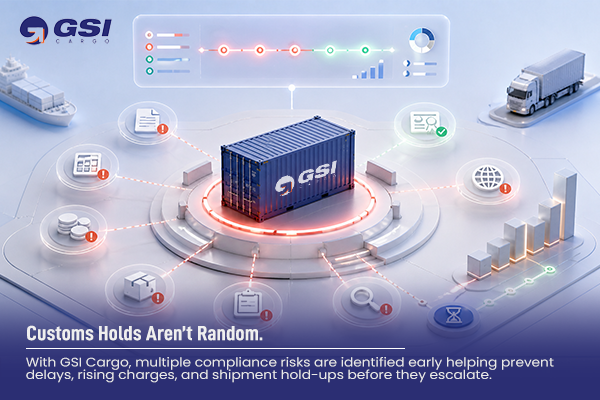
Introduction: A situation every importer fears
Rahul had done everything “right.” His sea shipment arrived at the port on schedule. The buyer was waiting. The production line was planned around the delivery.
Then the status changed to two words that can destroy a timeline: “Held at Customs.”
One day passed. Then three. Then a week.
Rahul wasn’t just losing time. He was bleeding money—demurrage, detention, storage charges, and the most expensive cost of all: customer trust.
Here’s the truth most businesses learn too late: customs delays aren’t random. They’re usually triggered by a small set of predictable mistakes.
This guide breaks down the top reasons shipments get stuck in customs (especially for sea freight) and what smart shippers do to prevent it.
Why customs delays are more dangerous than you think
When a container gets held, it’s not just “a delay.” It becomes a chain reaction:
- Demurrage charges (port charges for keeping the container longer than allowed)
- Detention fees (charges for holding the container outside the port)
- Storage costs and handling charges
- Missed delivery deadlines and production stoppages
- Angry customers and lost repeat business
A single hold can easily cost more than the freight itself—especially when it drags on for days.
Top reasons shipments get stuck in customs (sea freight)
1) Incorrect or incomplete documentation (the #1 cause)
This is the most common reason containers get held.
Common triggers include:
- Missing invoice, packing list, Bill of Lading, or Certificate of Origin
- Mismatch between documents (weight, quantity, HS code, value)
- Wrong shipper/consignee details
Customs doesn’t “adjust it later.” If something doesn’t match, they pause the shipment until it’s clarified.
2) Wrong HS code classification
HS codes decide duty and tax rates, compliance requirements, and risk flags.
A wrong HS code can lead to:
- Incorrect duty calculation
- Red flags and inspection
- Penalties or reclassification delays
3) Undervaluation or overvaluation of goods
Customs authorities watch valuation closely.
- Too low can look like duty evasion
- Too high can look like financial manipulation
Either way, the result is reassessment, verification, and delay.
4) Restricted or prohibited goods
Some cargo types require special handling and approvals, such as chemicals, pharma, electronics, scrap, and certain raw materials.
If approvals are missing, clearance may not even start.
5) Missing licenses or permits (India context)
In India, compliance can be strict. Depending on the goods, you may need:
- DGFT licenses
- BIS certification
- FSSAI approvals
Missing even one requirement can lead to a hold because customs cannot proceed without it.
6) Random or targeted customs inspection
Sometimes everything is correct, and you still get selected.
Customs may do:
- Physical inspection
- X-ray scanning
- Sampling
This is more common for new importers/exporters, high-risk commodities, and certain origins/trade lanes.
7) Country of origin (COO) issues
Problems with COO can trigger serious delays:
- Missing or incorrect Certificate of Origin
- Trade restrictions or sanctions
- Anti-dumping duties
8) Duty and tax payment delays
Even after assessment, containers won’t be released until duties and taxes are paid.
Delays happen due to late payment approvals, banking processing time, or missing payment confirmation.
9) Poor packaging or labeling
Sea freight is physical, and customs often check physical compliance.
Issues include missing labels, unsafe packaging, incorrect hazard markings, or non-compliance with standards. This can trigger inspection and delay.
10) Non-compliance with local regulations
Every country has different rules. What clears in one port may get held in another.
Common issues include documentation format differences, product compliance requirements, and local import restrictions.
11) Peak season and port congestion
During peak season, even compliant shipments can slow down due to higher volume, customs backlog, and port congestion.
If your shipment has even a small issue, delays multiply fast.
12) Lack of an experienced customs partner (the hidden multiplier)
This is the most overlooked reason.
When businesses try to manage customs without experienced support:
- Filing errors increase
- Follow-ups get delayed
- Compliance gaps appear
- Small issues become big holds
The real cost of customs delays (most businesses ignore this)
Many importers focus only on freight cost. But customs delays hit profit in silent ways:
- Daily demurrage and detention
- Storage and handling
- Missed sales windows
- Customer churn
- Operational chaos
How to avoid customs delays (what smart shippers do)
Use this as a practical checklist:
- Double-check all documents before arrival
- Validate HS codes with product specs
- Keep valuation clean and supportable
- Arrange licenses and permits early (BIS/FSSAI/DGFT where applicable)
- Ensure packaging and labeling compliance
- Plan for peak season congestion
- Work with an experienced customs team that follows up proactively
Why businesses choose GSI Cargo
Customs clearance isn’t just paperwork—it’s risk management.
With GSI Cargo, you get:
- Accurate documentation handling
- Strong customs compliance support
- Proactive follow-ups to prevent holds
- End-to-end logistics expertise across air, sea, and road
So your shipment doesn’t become the next port story with rising charges and no answers.
Final Takeway
Customs delays are predictable, preventable, and avoidable.
The question is: will you larn it the expensive way- or build or process the prvents hold s befor they happen?
Want fewer customs surprises? Partner with GSI Cargo and keep your sea shipments moving smoothly.