

 My GIA Now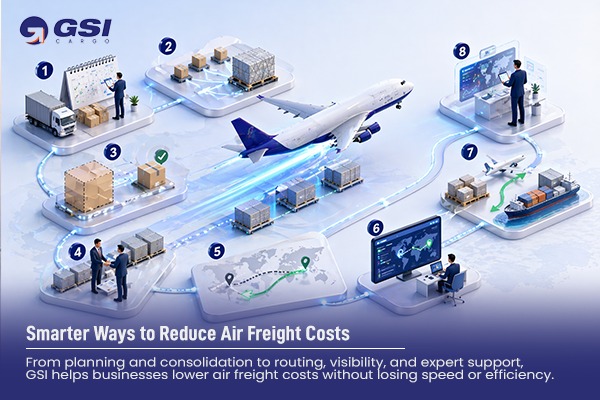
Air freight is the fastest way to move cargo globally—but speed comes at a price. For businesses operating in competitive markets, the real challenge is not just moving goods quickly, but doing so cost-effectively without slowing down operations.
The good news? With the right strategies, you can significantly reduce air freight costs while maintaining efficiency and reliability.
1. Optimize Shipment Planning (Avoid Last-Minute Bookings)
Urgent shipments often lead to premium charges. Poor planning forces businesses into express or priority rates, which are considerably higher.
What to do:
- Forecast demand more accurately
- Plan shipments in advance
- Align production and dispatch schedules
Impact: Lower freight rates + better space availability
2. Consolidate Shipments Smartly
Shipping multiple small consignments separately increases cost per kg. Consolidation helps you maximize space and reduce cost per unit.
Approach:
- Combine shipments heading to the same destination
- Work with freight forwarders offering consolidation services
- Use scheduled consolidation programs
Impact: Reduced cost per shipment without affecting timelines
3. Focus on Chargeable Weight Optimization
Air freight pricing is based on chargeable weight (the higher of actual vs volumetric weight). Many businesses unknowingly pay more due to inefficient packaging.
How to optimize:
- Reduce packaging volume
- Use right-sized cartons
- Avoid unnecessary cushioning
Impact: Immediate cost savings without operational change
4. Negotiate Long-Term Contracts
Spot rates fluctuate frequently. If you ship regularly, relying on spot pricing can increase costs unpredictably.
Better strategy:
- Enter into long-term rate agreements
- Build volume commitments with carriers or forwarders
- Lock in stable pricing
Impact: Cost predictability + better negotiation power
5. Choose the Right Airports & Routes
Not all routes are equal. Some airports have higher handling charges, congestion, or limited capacity.
Smart routing includes:
- Using secondary airports where feasible
- Avoiding peak congestion hubs
- Exploring multi-leg routing options
Impact: Lower costs without affecting delivery timelines
6. Leverage Technology & Visibility Tools
Lack of visibility leads to delays, re-routing, and inefficiencies—ultimately increasing costs.
Use:
- Shipment tracking systems
- Data analytics for route optimization
- Digital freight platforms
Impact: Better control, fewer surprises, optimized decisions
7. Balance Speed with Cost (Use Hybrid Models)
Not every shipment needs express delivery. Businesses often overpay for speed they don’t require.
Alternative approach:
- Use deferred air freight services
- Combine air + sea (sea-air solutions)
- Segment shipments based on urgency
Impact: Significant cost reduction while maintaining service levels
8. Partner with the Right Freight Forwarder
An experienced logistics partner can unlock hidden savings through network, expertise, and negotiation strength.
Look for:
- Industry experience
- Strong airline relationships
- Value-added services (consolidation, advisory)
Impact: Strategic cost savings + operational efficiency
Final Thoughts
Reducing air freight costs is not about cutting corners—it’s about making smarter decisions.
Businesses that succeed in optimizing logistics focus on:
- Planning ahead
- Using data
- Improving packaging
- Choosing the right partners
In today’s fast-moving supply chains, the winners are those who can balance speed, cost, and efficiency seamlessly.
Also Read :