

 My GIA Now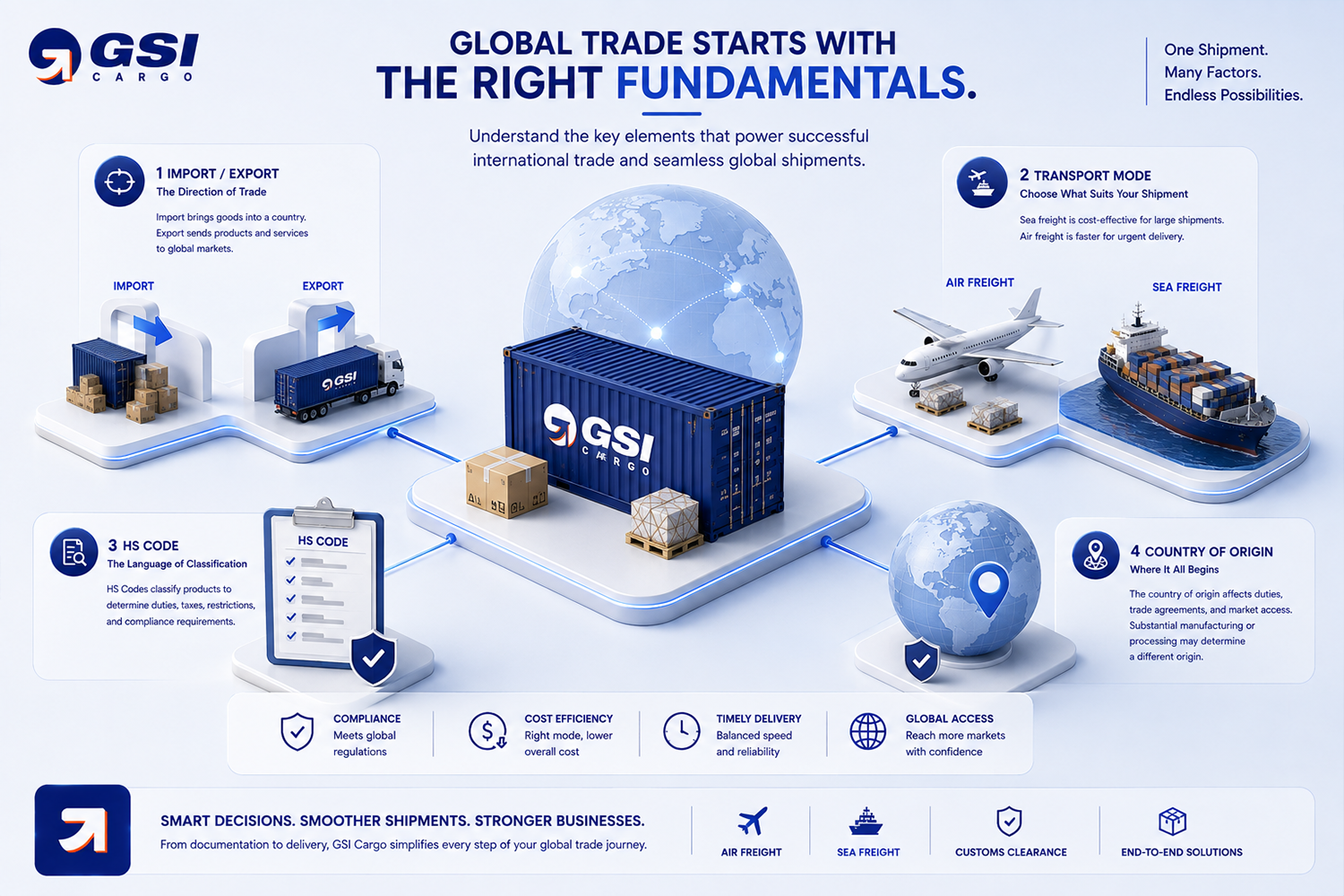
In today's global economy, businesses are no longer limited to buying and selling within their own country. Import and export allow companies to access international markets, advanced technology, raw materials, machinery, and customers around the world. Understanding how international trade works is therefore essential for businesses looking to grow globally.
What Is Import?
Import means bringing goods or products into a country from another country for use, resale, manufacturing, or further processing.
Imports are important because every country may not have access to the same technology, raw materials, machinery, or products. For example, advanced technology developed in countries such as Germany, Japan, Korea, or the USA may initially be imported into India. As demand increases, Indian businesses can gradually develop local manufacturing capabilities.
The growth of products such as LED lighting and tiles provides a good example of how imports can help introduce products and technology into a market, eventually supporting domestic production.
What Is Export?
Export means selling and sending goods or services from one country to customers or businesses in another country.
Exports are important because they bring international revenue into the domestic economy. A business that successfully sells its products in India can potentially expand the same product into international markets.
India already supplies products and services to customers across the world, demonstrating the potential for Indian businesses to become part of global supply chains. Increasing exports can therefore create opportunities for businesses while supporting broader economic growth.
Choosing the Right Mode of Transport
International cargo is commonly transported by air or sea, depending on the shipment's size, urgency, cost, and delivery deadline.
Sea freight is generally more economical for large shipments and high-volume cargo. However, it usually takes longer.
Air freight is faster and can be more suitable when the shipment is urgent, time-sensitive, or relatively small.
Therefore, the cheapest option is not always the best option. Businesses should consider freight cost, transit time, shipment size, and delivery deadline before selecting a mode of transport.
What Is an HS Code?
An HS (Harmonized System) Code is an internationally recognized classification system used to identify traded goods.
HS Codes help customs authorities determine the appropriate classification of products and, depending on the country and applicable regulations, assess customs duties, taxes, restrictions, licensing requirements, and other compliance conditions.
Goods may fall into different categories such as Free, Restricted, or Prohibited, depending on the applicable regulations. Therefore, correctly identifying the HS Code before importing or exporting is extremely important.
Why Is Country of Origin Important?
The Country of Origin identifies where a product was manufactured or sufficiently processed. It is important because customs duties and trade benefits can sometimes depend on the origin of the goods and applicable trade agreements.
Simply importing a product from one country and re-exporting it from another does not automatically change its country of origin. However, substantial processing or manufacturing that meets the applicable origin rules may result in a different origin determination.
Conclusion
Import and export are much more than simply moving goods across borders. Businesses need to understand international trade procedures, transportation modes, HS Codes, customs requirements, and Country of Origin to operate successfully in global markets.
For businesses aiming to expand internationally, understanding these fundamentals is the first step toward becoming a part of the global supply chain and building a truly global business.
Contact GSI Cargo today for dependable international logistics solutions tailored to your business needs.
Also Read : How GSI Cargo Simplifies WPC & ETA Licensing for Electronics Imports