

 My GIA Now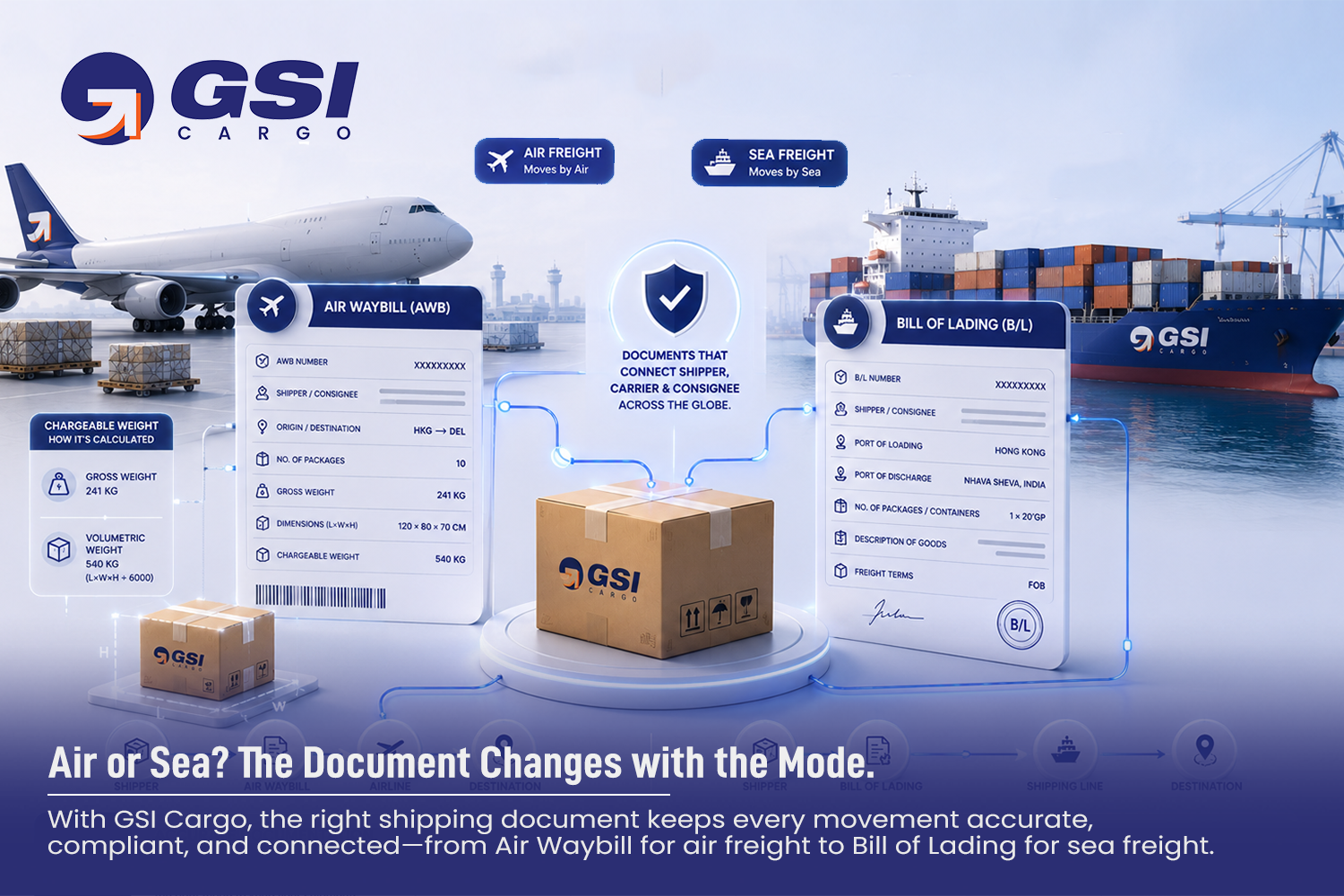
In international logistics, Air Waybill (AWB) and Bill of Lading (B/L) are two important shipping documents. Both are used to document the transportation of goods, but the major difference is the mode of transport. An Air Waybill is used for air freight, while a Bill of Lading is used for sea freight.
A simple courier example makes this easy to understand.
What Is an Air Waybill?
When you send a parcel through a courier company, you receive a courier receipt or shipping slip. It normally contains the sender's details, receiver's details, package information, weight, and a tracking number. This document acts as evidence that the courier has received your shipment and helps you track it.
In professional air freight, a similar document is called an Air Waybill (AWB). It is issued by an airline or, in certain arrangements, by a freight forwarder or consolidator.
An AWB generally contains the AWB number, shipper and consignee details, origin and destination airports, number of packages, gross weight, dimensions, chargeable weight, and freight information.
For example, if goods are shipped from Hong Kong to Delhi by air, the AWB will identify the shipper, consignee, origin airport, destination airport, packages, weight, and applicable freight details.
What Is a Bill of Lading?
A Bill of Lading is the principal transport document used for sea shipments. The word "lading" refers to the process of loading cargo onto a vessel.
Like an AWB, a Bill of Lading contains important shipment information such as the shipper, consignee, cargo description, number of packages, weight, ports of loading and discharge, and freight terms.
Therefore, the easiest way to remember the difference is:
Air Freight → Air Waybill
Sea Freight → Bill of Lading
Understanding Chargeable Weight in Air Freight
One important feature of air freight documentation is chargeable weight. The actual or gross weight of cargo may not always be the weight used for calculating freight.
If goods are lightweight but occupy a large amount of space, their volumetric weight may be higher than their actual weight. Dimensions such as length, width, and height are therefore important for freight calculation.
For example, if the gross weight is 241 kg but the calculated volumetric weight is 540 kg, the applicable chargeable weight may be 540 kg, depending on the applicable airline calculation. The AWB records the relevant weight and dimensions needed for this calculation.
Master AWB and House AWB
In consolidated air freight, a freight forwarder may combine shipments from multiple customers into one airline shipment. The airline may issue a Master Air Waybill (MAWB) to the forwarder, while the forwarder issues individual House Air Waybills (HAWBs) for its customers.
This allows several individual consignments to move under one consolidated airline shipment.
Final Difference
In simple terms, an Air Waybill documents the transportation of cargo by air, whereas a Bill of Lading documents the transportation of cargo by sea. Both are essential shipping documents, but their application depends primarily on the mode of transportation.
Understanding AWB and B/L is important for anyone involved in freight forwarding, international trade, customs clearance, and logistics, because these documents connect the shipment, carrier, shipper, consignee, and transportation process.
Get in touch with GSI Cargo today for dependable international logistics solutions tailored to your business needs.
Also Read : How ATA Carnet Simplifies Temporary Export of Goods