

 My GIA Now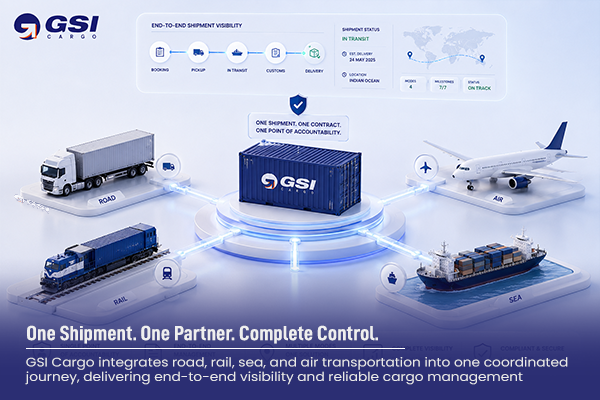
What Is a Multimodal Transport Operator (MTO)?
Imagine an importer in India purchasing machinery from Germany. The cargo travels by road to the European port, sea to India, and finally by rail and road to the factory. Managing multiple transport providers across different countries can quickly become challenging if delays, documentation issues, or customs queries arise.
A Multimodal Transport Operator (MTO) solves this challenge by transporting cargo through two or more modes of transport—road, rail, sea, or air—under a single transport contract and a single Bill of Lading. Instead of coordinating with multiple carriers, businesses work with one logistics partner that plans, manages, and takes responsibility for the shipment from origin to final destination.
Why Choose a Licensed MTO?
In India, licensed MTOs are registered under the Ministry of Ports, Shipping and Waterways and must comply with statutory and regulatory requirements before obtaining an MTO licence. They undergo verification, maintain prescribed operational standards, issue recognized transport documents, and comply with applicable reporting obligations. Licensed MTOs also maintain insurance relating to their transport liabilities under the terms of their Bills of Lading and applicable regulations, providing customers with greater confidence and accountability.
Unlike individual carriers or freight forwarders, an MTO acts as a single point of responsibility, coordinating every stage of multimodal transportation while simplifying communication and reducing operational risks.
Carrier vs. NVOCC vs. MTO
Although these terms are often used interchangeably, they serve different roles in international logistics.
- Carrier: Owns and operates transportation assets such as vessels, aircraft, trucks, or trains. Shipping lines like MSC, Maersk, Hapag-Lloyd, and CMA CGM own or operate vessels and containers to provide ocean freight services.
- NVOCC (Non-Vessel Operating Common Carrier): Does not own vessels but operates its own containers, purchases space from shipping lines, and issues its own Bills of Lading.
- Multimodal Transport Operator (MTO): Integrates multiple modes of transportation under one contract, coordinating carriers, NVOCCs, customs authorities, and inland transport providers to deliver seamless door-to-door logistics.
Benefits of Working with a Licensed MTO
Choosing a licensed MTO offers significant advantages:
- Single point of contact and accountability
- End-to-end transportation management
- Efficient coordination between road, rail, sea, and air
- Professional documentation and customs support
- Better shipment visibility
- Faster issue resolution
- Reduced logistics costs through optimized planning
- Improved compliance and supply chain efficiency
Businesses can focus on their core operations while experienced logistics professionals manage the complexities of global transportation.
How GSI Cargo Supports Global Trade
GSI Cargo Private Limited is a licensed Multimodal Transport Operator (MTO) providing integrated logistics solutions across road, rail, sea, and air transportation. Our services include freight planning, customs clearance, multimodal transportation, documentation management, cargo consolidation, and complete end-to-end supply chain solutions.
What truly differentiates GSI Cargo is our Digital Freight Solutions and advanced shipment tracking platform.
While most shipping lines provide tracking only from port to port, GSI Cargo delivers complete end-to-end shipment visibility—from shipment planning and booking through customs clearance to final door-to-door delivery.
Every customer receives authorized login credentials, secure email notifications, and real-time shipment updates, allowing them to monitor all shipments from a single dashboard. There is no need to log in to multiple shipping line websites, use different tracking software, or contact separate operations managers for shipment updates.
With just one click, customers can view the complete live journey of every shipment, including:
- Shipment Planning & Booking
- Cargo Pickup
- Container Stuffing
- Vessel Departure & Arrival
- Customs Clearance Status
- Inland Transportation
- Final Door Delivery
- Estimated Date of Delivery (EDD)
The platform also provides access to important shipment information, including:
- Bill of Entry Number
- IGM Number
- VGM Details
- Bill of Lading Details
- Container Number, Size & Type
- Seal Number
- Cargo Weight
- Vessel & Voyage Details
- Customs Clearance Status
- Delivery Milestones
Whether you have one shipment or hundreds of ongoing import and export consignments, all cargo can be monitored on one centralized screen, giving complete visibility, better inventory planning, faster decision-making, and improved customer communication.
Conclusion
In today's highly connected global supply chains, choosing a licensed Multimodal Transport Operator is more than selecting a logistics provider—it's choosing a trusted partner responsible for your shipment from origin to destination.
By combining multimodal transportation expertise, regulatory compliance, and complete digital visibility, an MTO simplifies logistics, reduces operational risks, and improves supply chain performance.
At GSI Cargo Private Limited, we go beyond traditional freight forwarding by combining our licensed MTO expertise with Digital Freight Solutions that provide complete door-to-door shipment tracking, centralized visibility, and real-time logistics intelligence. From shipment planning to final delivery, GSI Cargo ensures your cargo remains connected, transparent, and under control—every step of the way.
Also Read : How GSI Cargo Simplifies WPC & ETA Licensing for Electronics Imports