

 My GIA Now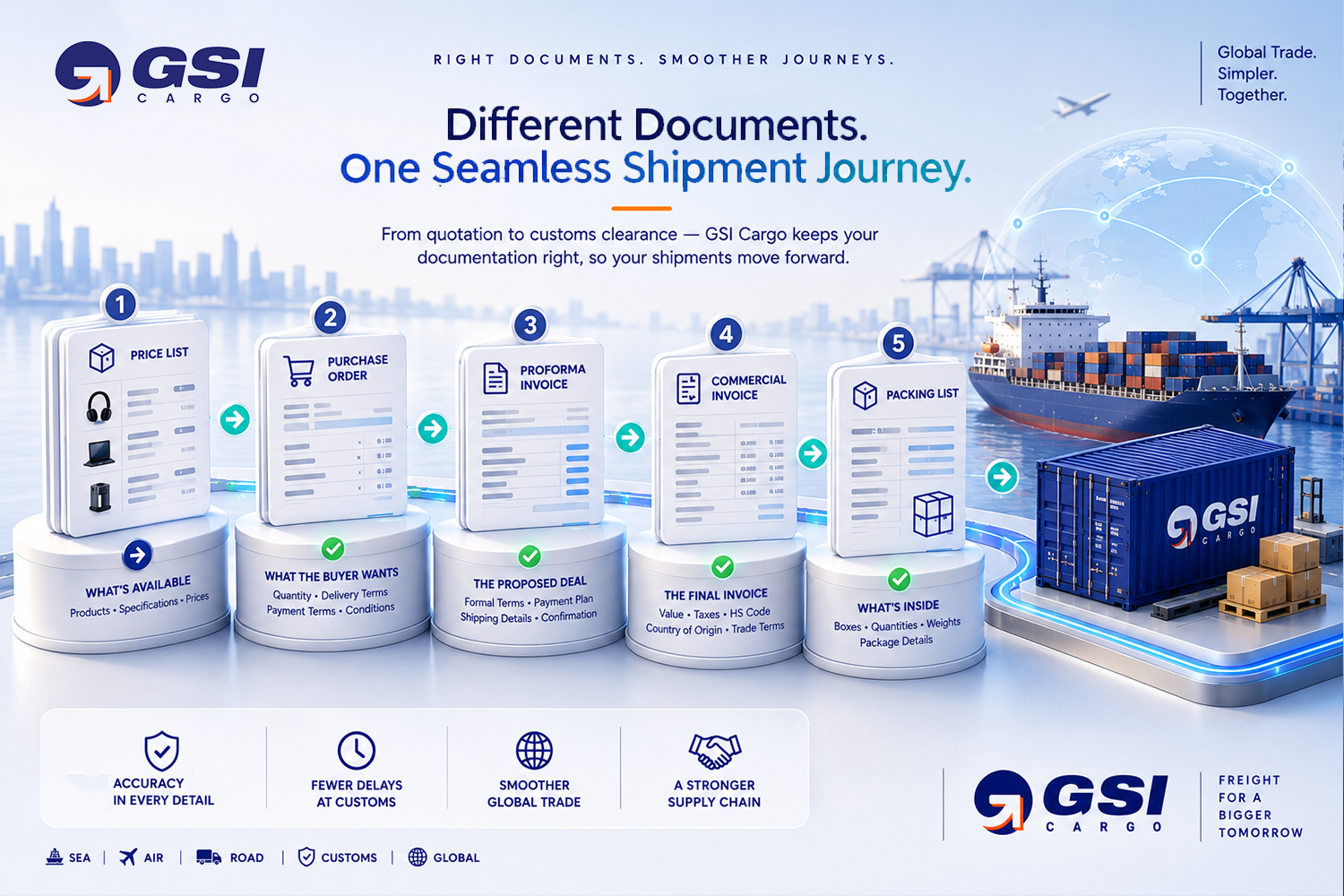
In international trade and B2B transactions, several documents are exchanged before, during, and after a shipment. While these documents may look similar, each has a different purpose. Understanding the difference between a Price List, Purchase Order, Proforma Invoice, Commercial Invoice, and Packing List is essential for buyers, sellers, freight forwarders, and customs professionals.
Price List – The Starting Point
A Price List is generally provided by the seller to show the products available, their specifications, models, and prices. It helps the buyer understand what the supplier offers and at what price.
For example, if a manufacturer sells personal grooming products and home appliances, its price list may contain different models along with their respective prices.
The price list is mainly a reference and quotation document. It does not itself confirm that an order has been placed.
Purchase Order – The Buyer's Official Order
Once the buyer decides what they want to purchase, they issue a Purchase Order (PO) to the supplier.
The PO normally includes the product description, model number, quantity, agreed price, delivery requirements, payment terms, and other terms and conditions. In a B2B transaction, it is generally issued on the buyer company's official letterhead or through its formal purchasing system.
In simple terms:
Price List = What the seller offers
Purchase Order = What the buyer wants to purchase
Proforma Invoice – The Seller's Preliminary Invoice
After receiving the Purchase Order, the seller may issue a Proforma Invoice (PI). It provides the buyer with a formal summary of the proposed transaction before the actual sale is invoiced.
A Proforma Invoice can include the buyer and seller details, product description, quantity, unit price, total value, currency, payment terms, shipping terms, discounts, and other conditions. It is particularly useful for confirming the order and arranging advance payment or other agreed payment terms.
Unlike a Commercial Invoice, the Proforma Invoice is generally a preliminary document rather than the final accounting/tax invoice.
Commercial Invoice – The Final Sales Invoice
The Commercial Invoice is the actual invoice issued for the shipment and is an important document for accounting and customs purposes.
It normally contains seller and buyer details, invoice number and date, product description, model/serial numbers where applicable, quantity, unit price, total value, currency, applicable taxes, and relevant shipping terms. For international shipments, details such as HS Code and country of origin may also be included.
Customs authorities use the commercial invoice to help assess the value and nature of the goods for customs purposes.
Packing List – What Is Inside the Shipment?
The Packing List focuses on the physical contents of the shipment rather than its financial value.
It can show the number of cartons or boxes, item descriptions, quantities, box-wise packing details, net weight, gross weight, and other package information.
For example, if a shipment contains 53 pieces packed into five boxes, the packing list can indicate which products are packed in which box. This becomes particularly useful during customs examination because officials can identify and verify the contents of specific packages.
The Simple Flow
Price List → Purchase Order → Proforma Invoice → Production/Preparation → Commercial Invoice + Packing List → Shipment
In short, the Price List tells the buyer what is available, the Purchase Order confirms what the buyer wants, the Proforma Invoice confirms the proposed commercial terms, the Commercial Invoice records the actual sale, and the Packing List explains how the goods are physically packed.
Understanding these five documents helps ensure smoother B2B transactions, accurate documentation, and more efficient international shipping and customs clearance.
Simplify Your International Shipping Documentation with GSI Cargo
From Purchase Orders and Proforma Invoices to Commercial Invoices and Packing Lists, accurate documentation is essential for smooth international trade and customs clearance. At GSI Cargo, we help businesses manage their freight forwarding, air freight, sea freight, and customs clearance requirements while ensuring the right documentation supports every shipment.
Get in touch with GSI Cargo today to discuss your import or export requirements and make your international shipments simpler and more efficient.
Also Read : How ATA Carnet Simplifies Temporary Export of Goods