

 My GIA Now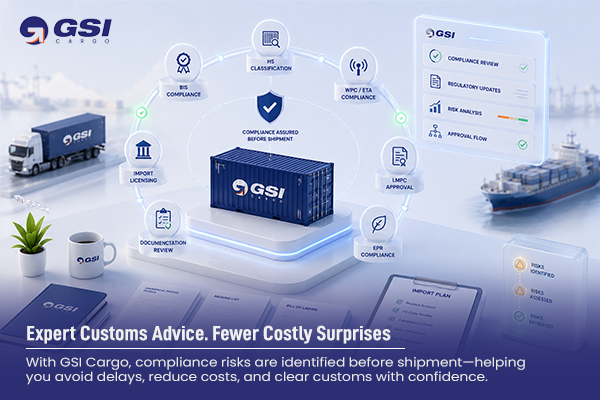
Most Importers Save on Freight… But Lose Money at Customs
Every importer negotiates for better product prices and lower freight costs. Yet, many overlook the single biggest factor that can impact profitability—customs compliance.
A wrong HS Code, missing certificate, incorrect declaration, or overlooked regulatory approval can stop an entire shipment at customs. The result is demurrage charges, storage costs, production delays, missed delivery commitments, and dissatisfied customers.
The truth is simple: successful importing is not just about moving cargo—it is about moving it compliantly.
Why a Customs Consultant Is Like a Trusted Doctor
Think of your customs consultant the same way you think of an experienced doctor.
A good doctor doesn't wait for a disease to become serious before acting. They diagnose the root cause, identify hidden risks, and recommend the right treatment before the problem grows.
Similarly, a customs consultant studies your products, business model, and import process before your shipment reaches customs.
They ask important questions such as:
- Is the HS Code correctly classified?
- Does the product require BIS, WPC, ETA, LMPC, or EPR compliance?
- Is customs valuation correct?
- Are all import documents complete?
- Are there any regulatory risks that could delay clearance?
Finding these issues before shipment dispatch saves businesses significant time, money, and stress.
Customs Rules Keep Changing—Are You Keeping Up?
One of the biggest challenges for importers is that customs regulations never remain static.
Government notifications, licensing requirements, valuation guidelines, product standards, and compliance procedures are updated regularly. A shipment that cleared smoothly six months ago may require additional approvals today.
Businesses that depend on outdated information often face unnecessary customs objections.
Regular discussions with an experienced customs consultant ensure your business remains compliant with the latest regulations and prepared for future imports.
Freight Forwarding and Customs Consultancy Are Not the Same
Many importers assume that their freight forwarder automatically possesses deep customs expertise.
In reality, these are two completely different professions.
A freight forwarder specializes in transportation, carrier negotiations, routing, and freight pricing.
A customs consultant specializes in:
- HS Code classification
- Customs valuation
- Import licensing
- Government regulations
- Documentation compliance
- Duty optimization
- Customs dispute resolution
Both are equally important, but customs compliance should always be handled by dedicated subject matter experts.
What Does a Customs Consultant Actually Do?
An experienced customs consultant supports businesses throughout the import journey by:
✔ Reviewing HS Code classifications
✔ Verifying import documentation
✔ Advising on BIS, WPC, ETA, LMPC, EPR and other approvals
✔ Calculating applicable duties and taxes
✔ Monitoring regulatory updates
✔ Identifying compliance risks before shipment dispatch
✔ Assisting during customs queries, examinations, and disputes
Their objective is not just to clear shipments—but to prevent customs problems before they occur.
The Hidden Cost of Choosing the Cheapest Customs Broker
Many businesses negotiate customs brokerage fees aggressively, believing customs clearance is simply paperwork.
Unfortunately, this can become an expensive mistake.
Low-cost brokers often manage large volumes with limited resources. When shipments move smoothly, everything appears fine. But when customs raises technical questions or seeks clarification, many brokers lack the expertise or escalation support required to resolve complex issues.
A small saving in brokerage fees can easily turn into much larger losses through delays, penalties, storage charges, and disrupted supply chains.
Choosing a customs consultant should be based on knowledge, experience, and trust—not just price.
Experience Makes the Difference When Shipments Get Stuck
The real value of a customs consultant becomes evident when a shipment faces customs scrutiny.
Whether the issue involves product classification, valuation, licensing, country of origin, or documentation, experienced consultants know how to prepare accurate responses, coordinate with customs authorities, and resolve issues efficiently.
In customs clearance, experience often determines whether cargo is released in days or delayed for weeks.
Why Businesses Choose GSI Cargo
For over 26 years, GSI Cargo Private Limited has been helping importers simplify customs compliance across India.
Our experienced customs specialists provide:
- Customs consultancy
- HS Code classification
- Documentation verification
- BIS, WPC, ETA, LMPC & EPR compliance support
- Duty planning and advisory
- Customs clearance coordination
- End-to-end logistics solutions
What makes GSI Cargo different is our commitment to transparency, proactive communication, and personalized service. We don't wait for problems to occur—we help businesses identify compliance risks in advance, educate clients on changing regulations, and provide practical solutions that keep shipments moving.
Final Thoughts
In today's highly regulated global trade environment, customs consultancy is no longer an optional service—it is a strategic business advantage.
The right customs consultant helps businesses reduce risks, improve compliance, avoid unnecessary costs, and maintain a reliable supply chain.
Instead of choosing a customs broker based solely on the lowest fee, choose a partner who understands your business, anticipates compliance challenges, and stands beside you when it matters most.
With over 26 years of expertise, GSI Cargo Private Limited helps businesses import with confidence through professional customs consultancy, transparent processes, and seamless customs clearance solutions across India.
Also Read : Import vs Export: Understanding Shipping Modes, HS Codes and Country of Origin