

 My GIA Now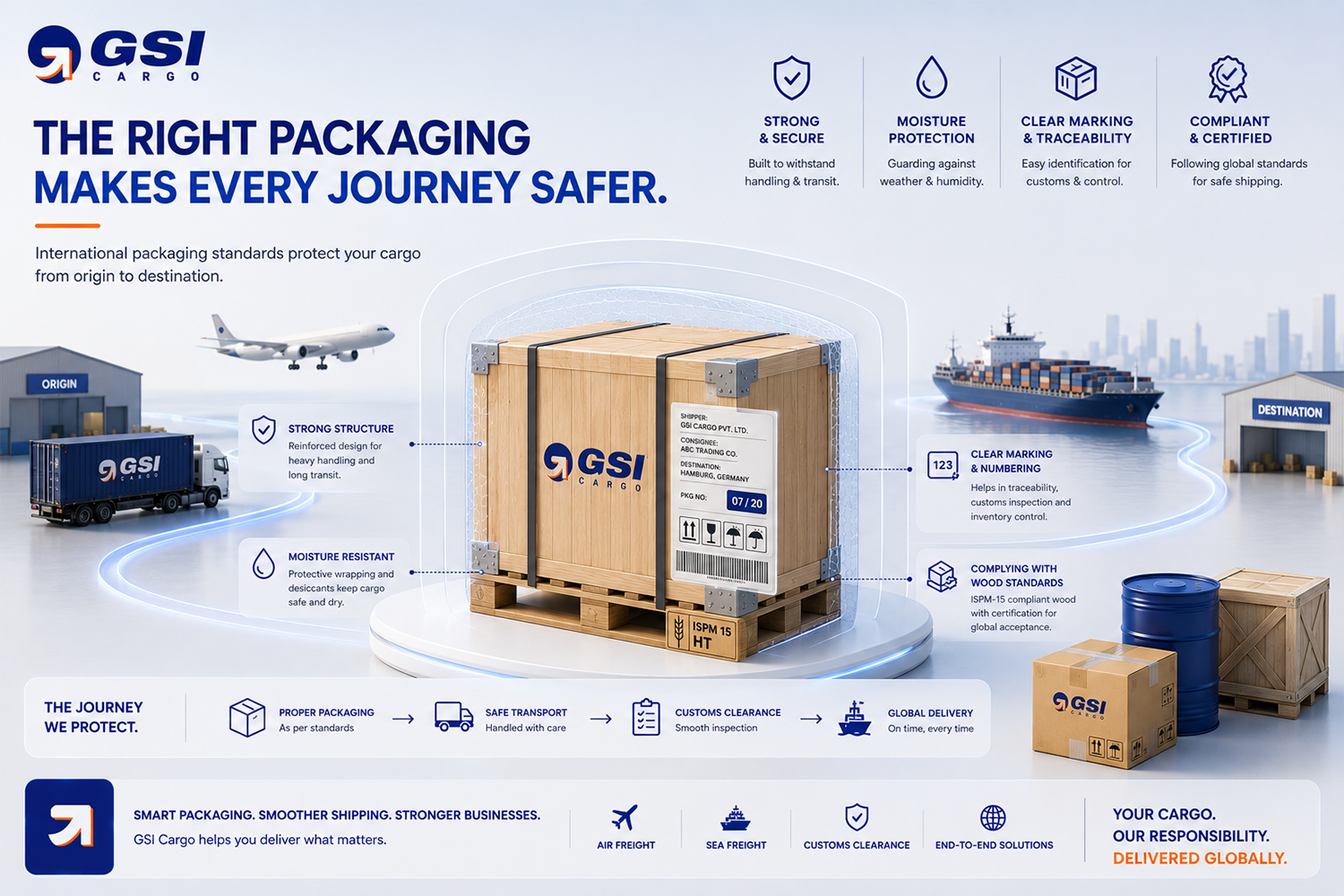
When goods travel internationally, packaging is not simply about putting products inside a box. Packaging is a critical part of cargo safety, compliance and successful delivery.
Unlike domestic shipments, international cargo may pass through multiple stages of handling—factory to warehouse, warehouse to customs facility, customs to airport or port, transit hubs and finally the destination. At every stage, the shipment may be loaded, unloaded, stacked and transported again. Poor-quality packaging can therefore turn a perfectly good product into a damaged shipment.
Why International Packaging Standards Matter
One of the most common causes of cargo damage is inadequate packaging. Reusing old or weak cartons that may be acceptable for domestic movement can create significant risks during international transportation.
Depending on the shipment, airlines, shipping lines or other carriers may reject cargo if the packaging is considered unsuitable for safe transportation. Destination-country requirements may also apply, particularly where wooden packaging materials are involved.
The packaging should always be selected according to the weight, dimensions, nature and sensitivity of the goods.
Heavy machinery, for example, requires strong and appropriately designed crates or pallets. Standard-quality export cartons should be used for lighter cargo, while delicate products may require internal protection such as cushioning, foam or other suitable protective material.
Protecting Cargo from Moisture and Weather
Moisture is another major concern, particularly during the monsoon season or when shipments experience multiple transit points.
For moisture-sensitive cargo, suitable protective measures can include moisture-resistant wrapping and appropriate moisture-absorbing materials inside the packaging. External plastic wrapping can provide an additional layer of protection where appropriate.
The objective is simple: the product should remain protected even when transportation conditions are unpredictable.
Wooden Packaging Requires Special Attention
When wooden pallets, crates or other wooden packaging materials are used, exporters must check the applicable destination-country requirements and obtain the required certification or treatment documentation.
The strength of the wooden packaging should also correspond to the cargo. Heavy machinery requires strong structural support, suitable fastening and properly designed crates or pallets. Packaging should be constructed so that nails, edges or other components do not create a hazard to the cargo or other shipments.
Package Marking and Numbering
Proper marking is equally important.
Every export shipment should have clear identification, including relevant shipper and consignee details and package numbers. For example, if a shipment contains 20 cartons, the packages can be numbered systematically so that the physical cargo corresponds with the packing list.
This becomes particularly important during customs inspection. If customs authorities select a particular package for examination, clear package numbering helps them identify the corresponding contents and quantities quickly.
Good marking therefore improves traceability, customs handling and shipment control.
Labelling for Safe Handling
Labelling provides additional instructions to everyone handling the cargo.
Depending on the shipment, labels may indicate:
- Fragile cargo
- This Side Up
- Handle With Care
- Special handling requirements
- Airline or carrier-specific identification
- Master Air Waybill or shipment reference information
The correct labels help ensure that cargo is handled according to its nature and transportation requirements.
Dangerous Goods Need Specialized Packaging
Dangerous Goods require a completely different level of packaging, marking and documentation.
Such shipments must be classified according to the applicable dangerous-goods requirements, including the relevant UN number and classification. Packaging, labels, marks and shipping declarations must comply with the applicable regulations and carrier requirements.
These shipments should be handled by appropriately qualified and trained professionals who understand the relevant dangerous-goods procedures.
Choose Packaging According to the Commodity
There is no single packaging solution for every international shipment. Different products may require cartons, drums, bags, pallets, wooden crates or other specialized packaging.
Food products, chemicals, machinery, leather goods, fragile products and other commodities can have very different packaging and compliance requirements.
The key principle is:
Choose the right packaging material for the right commodity, weight, transportation mode and destination.
GSI Cargo: Your Partner in Export Packaging & Logistics
International packaging requires planning—not improvisation. Using professional packaging materials and following applicable shipping standards can significantly reduce the risk of damage, rejection, delays and additional costs.
At GSI Cargo, our logistics expertise helps customers understand their packaging requirements and coordinate appropriate packaging solutions for international shipments. From cargo assessment and packaging guidance to freight forwarding and customs coordination, we help build a safer end-to-end shipping process.
Planning an international shipment? Don’t let poor packaging put your cargo at risk.
Contact GSI Cargo today for professional guidance on export packaging, freight forwarding and international cargo handling. Let your shipment travel safely from origin to destination.