

 My GIA Now
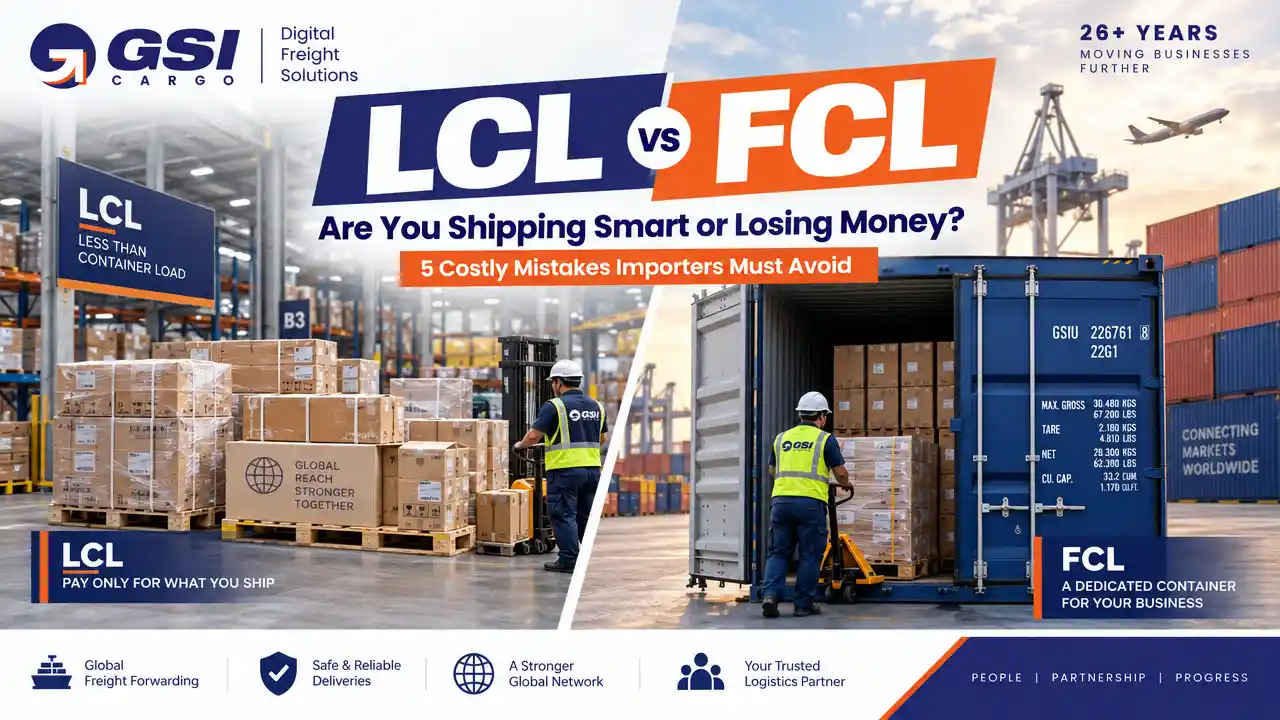
LCL vs FCL – Knowing the Right Time to Upgrade
In international shipping, choosing between Less than Container Load (LCL) and Full Container Load (FCL) is not just about cargo volume. It is about cost, transit time, cargo safety, and supply chain continuity.
With over 26 years of experience in international freight forwarding, GSI Cargo Private Limited helps businesses make smarter shipping decisions for imports and exports worldwide.
When Is LCL the Right Choice?
LCL is ideal for smaller shipments that do not require a full container. It allows businesses to pay for the space they use rather than an entire container. For lightweight, low-value cargo that does not require urgent delivery, LCL can be a cost-effective alternative to air freight.
However, shipping extremely small consignments—sometimes even 1–2 kg—by sea LCL may be uneconomical. Courier or air freight could offer better overall value when handling, documentation, and destination charges are considered.
When Should You Upgrade to FCL?
FCL becomes attractive when cargo volume, density, handling requirements, or total landed cost justify a dedicated container. Shipments around 10–15 CBM or more deserve a detailed LCL-versus-FCL comparison, although the break-even point depends on the route and local charges.
Dense cargo, high-value machinery, fragile equipment, and sensitive goods may benefit from FCL because they involve fewer handling and consolidation risks. Container selection—20-foot, 40-foot, open-top, or specialised equipment—should depend on cargo dimensions, weight, and loading requirements, not weight alone.
Why Immediate Movement Can Beat Waiting
For e-commerce shipments to the USA, blank sailings, vessel rollovers, and port delays can disrupt replenishment. In such cases, moving cargo through LCL promptly may be more valuable than waiting to consolidate a full container. Consistent inventory flow can outweigh marginal freight savings.
Similarly, combining multiple suppliers into one FCL is not always economical. Different production schedules, payment arrangements, and cargo readiness dates can create delays. Compare the total cost and timing before consolidating.
Beware of Hidden LCL Charges
CIF shipments with free-hand destination nominations can expose importers to unexpected destination charges. Always confirm origin and destination costs in writing before shipping, and clarify exactly which charges are included.
At GSI Cargo Private Limited, we believe every shipment deserves a customised solution. Our team provides tailored freight quotations, customs clearance guidance, duty estimates, and applicable compliance information.
Don't ship blindly. Ship strategically with GSI Cargo.
Also Read : Difference Between LCL and FCL in Sea Freight

