

 My GIA Now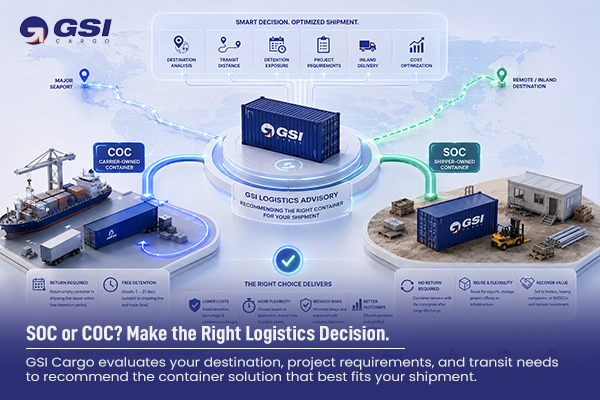
In international shipping, containers are the backbone of global trade. Whether you're moving machinery, project cargo, retail products, or humanitarian supplies, understanding the difference between SOC (Shipper-Owned Container) and COC (Carrier-Owned Container) can help you reduce costs, improve flexibility, and avoid unnecessary detention charges.
What is a COC (Carrier-Owned Container)?
A Carrier-Owned Container (COC) is a container owned by a shipping line or an NVOCC (Non-Vessel Operating Common Carrier). These containers are provided to the shipper as part of the ocean freight booking.
The freight charges typically include:
- Container rental
- Ocean freight
- Transportation from origin to destination
- Standard free detention period
Once the cargo reaches the destination, the consignee must unload the cargo and return the empty container to the shipping line's designated depot within the allowed free detention period. Depending on the shipping line and trade lane, this free period usually ranges from 5 to 21 days, subject to approval.
Since there is no upfront investment in purchasing a container, COC containers account for nearly 95–98% of global container shipments.
What is an SOC (Shipper-Owned Container)?
A Shipper-Owned Container (SOC) is a container purchased and owned by the shipper. It can be either a brand-new container or a used container acquired from a shipping line or container leasing company. Once purchased, it is registered and approved for international shipping.
Unlike COC containers, SOC containers are not required to be returned to the shipping line after delivery.
When Should You Use an SOC Container?
SOC containers are ideal when returning an empty container is difficult, expensive, or impractical. Common situations include:
- Shipments to remote inland destinations where returning the container to the nearest port may take several days.
- Cargo moving through multiple transit countries, especially in Africa, CIS countries, Afghanistan, and other landlocked regions.
- Large infrastructure, defence, mining, oil & gas, or humanitarian projects.
- United Nations or NGO projects where containers are retained and reused for site offices, storage, accommodation, or infrastructure development.
- Remote factory locations where additional loading time is required, helping avoid detention charges at origin.
Once the cargo is unloaded, the consignee can:
- Reuse the container for exports.
- Convert it into a storage facility or project office.
- Sell it to container traders, leasing companies, or NVOCCs to recover part of the investment.
SOC vs COC – Quick Comparison
Feature | SOC Container | COC Container |
| Ownership | Shipper | Shipping Line / NVOCC |
| Initial Investment | Required | Not Required |
| Return Container | Not Required | Mandatory |
| Detention Charges | Generally Avoided | Applicable after free period |
| Best For | Remote destinations, project cargo, humanitarian shipments | Regular import/export shipments |
| Reusability | High | Not Applicable |
How GSI Cargo Can Help
At GSI Cargo, we understand that every shipment has unique logistics requirements.
We provide:
- COC container bookings with leading global shipping lines and NVOCCs.
- SOC container procurement for specialised projects and long-distance inland deliveries.
- Freight solutions for 20' GP, 40' GP, 40' High Cube, and specialised equipment.
- Project cargo planning and multimodal transportation.
- End-to-end customs clearance, documentation, and worldwide shipping services.
- Expert guidance to help customers choose the most cost-effective container solution based on destination, transit time, detention exposure, and project requirements.
Whether you're shipping to a major seaport or a remote inland destination, GSI Cargo ensures your cargo moves efficiently, economically, and without unnecessary logistics challenges.
Need help deciding between an SOC and a COC container? Our logistics experts can evaluate your shipment and recommend the most suitable option to minimise costs while ensuring smooth delivery anywhere in the world.
Also Read : Role of Customs Consultancy in Smooth Import Operations