

 My GIA Now
A complete guide for legal import–export transactions
International trade from India is strictly regulated to ensure transparency, tax compliance, and legal flow of foreign exchange. Whether you are importing goods into India or exporting to a foreign country, certain registrations and compliances are mandatory. These include the IEC Code, AD Code, GST registration, and in many commercial structures, Importer on Record (IOR) and Exporter on Record (EOR) services.
This article explains these concepts in simple language and shows why they are essential for any legal import or export transaction from India.
What is the IEC Code (Importer Exporter Code)?
IEC stands for Importer Exporter Code. It is a 10-digit unique identification number issued by the Directorate General of Foreign Trade (DGFT), Government of India.
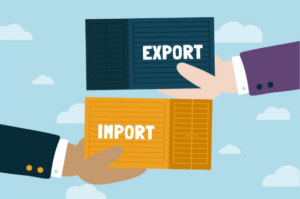
Any individual, proprietorship, partnership, LLP, or company that wants to import goods into India or export goods out of India for commercial purposes must obtain an IEC.
In Hindi, IEC is also known as Ayat Niryat Code:
- Ayat = Import
- Niryat = Export
Why is the IEC important?
Think of IEC as a passport for goods. Just as a person needs a passport to travel abroad, goods need an IEC to cross Indian borders.
Key features of IEC:
- Mandatory for all commercial imports and exports
- Issued online by DGFT
- No monthly or yearly return filing required
- Lifetime validity (only update required if details change)
- Used for customs clearance, foreign remittances, and government benefits
If there are changes in directors, address, bank account, IFSC code, or GST details, the IEC must be updated on the DGFT portal.
What is AD Code (Authorised Dealer Code)?
AD Code stands for Authorised Dealer Code. It is not applied directly by the importer or exporter.
AD Codes are issued by the Reserve Bank of India (RBI) to banks in India. These banks are authorised to handle foreign exchange transactions on behalf of the RBI.
How does AD Code work?
When you open a current account with a bank (for example SBI, PNB, HDFC, or Standard Chartered), that bank acts as an Authorised Dealer for your foreign trade transactions.
You must register your bank’s AD Code at the customs port from where you are importing or exporting.
Importance of AD Code:
- Links customs shipments with foreign payments
- Tracks export proceeds and import payments
- Ensures compliance with FEMA and RBI regulations
Example – Exporter:
- You export 10 shipments
- Customs data reflects all shipments
- Bank receives foreign remittances
- You submit export invoices and shipping bills to the bank
- Bank matches shipments with payments and closes transactions
Example – Importer:
- You import goods under the Bills of Entry
- You pay suppliers through banking channels
- Bank links import payments with customs data
Without AD Code registration, payments cannot be reconciled, and transactions remain non-compliant.
Understanding GST in Import & Export
GST stands for Goods and Services Tax. It applies to almost all goods and services in India.
GST on Imports:
When goods are imported:
- Basic Customs Duty (BCD) is charged
- IGST is charged on assessable value + BCD
- Other surcharges may apply
Example:
- Invoice value: ₹100
- BCD @10% = ₹10 → value becomes ₹110
- IGST @18% on ₹110 = ₹19.8
Total tax impact ≈ 30%
The good news: IGST paid on imports is available as Input Tax Credit (ITC) and can be adjusted against GST payable on domestic sales.
GST on Exports:
Exports are zero-rated supplies:
- No GST charged on export invoice
- Exporter can:
- Export under LUT (Letter of Undertaking) and claim GST refund
- Or export with payment of IGST and claim a refund later
All purchases must be supported by valid GST invoices to ensure the transaction is fully traceable.
What is Exporter on Record (EOR)?
Exporter on Record refers to the Indian entity whose IEC, GST, and bank account are used to execute the export.
This is commonly used when:
- A foreign buyer sources goods from multiple Indian vendors
- A trading company consolidates goods and exports them
Key compliance points:
- Exporter on record must receive foreign remittance in its Indian bank account
- Goods must be purchased legally with GST invoices
- Customs, GST, and banking records must match
If payments are not received legally or goods are not purchased through proper invoices, the transaction becomes illegal, attracting notices and penalties.
What is Importer on Record (IOR)?
Importer on Record is the entity whose name appears on the Bill of Entry and who is legally responsible for the import.
IOR services are used when:
- The end user does not have an IEC
- Imports for exhibition, demonstration, or display
- Temporary imports or special-purpose imports
Responsibilities of IOR:
- Correct HS code and valuation
- Payment of customs duties and GST
- Payment to a foreign supplier through the banking channel
- Compliance with customs and RBI rules
After importation, the IOR must legally sell or transfer goods, charge GST, and receive payment through proper channels.
Conclusion
IEC, AD Code, GST, IOR, and EOR are not optional formalities—they are the foundation of legal international trade from India. Together, they ensure:
- Transparent movement of goods
- Regulated foreign exchange flow
- Tax compliance
- Protection from penalties and legal action
Whether you are a manufacturer, trader, startup, or multinational company, understanding and complying with these regulations is critical to smooth, compliant import–export operations.
Legal trade is not complicated—when done the right way.
Read More