

 My GIA Now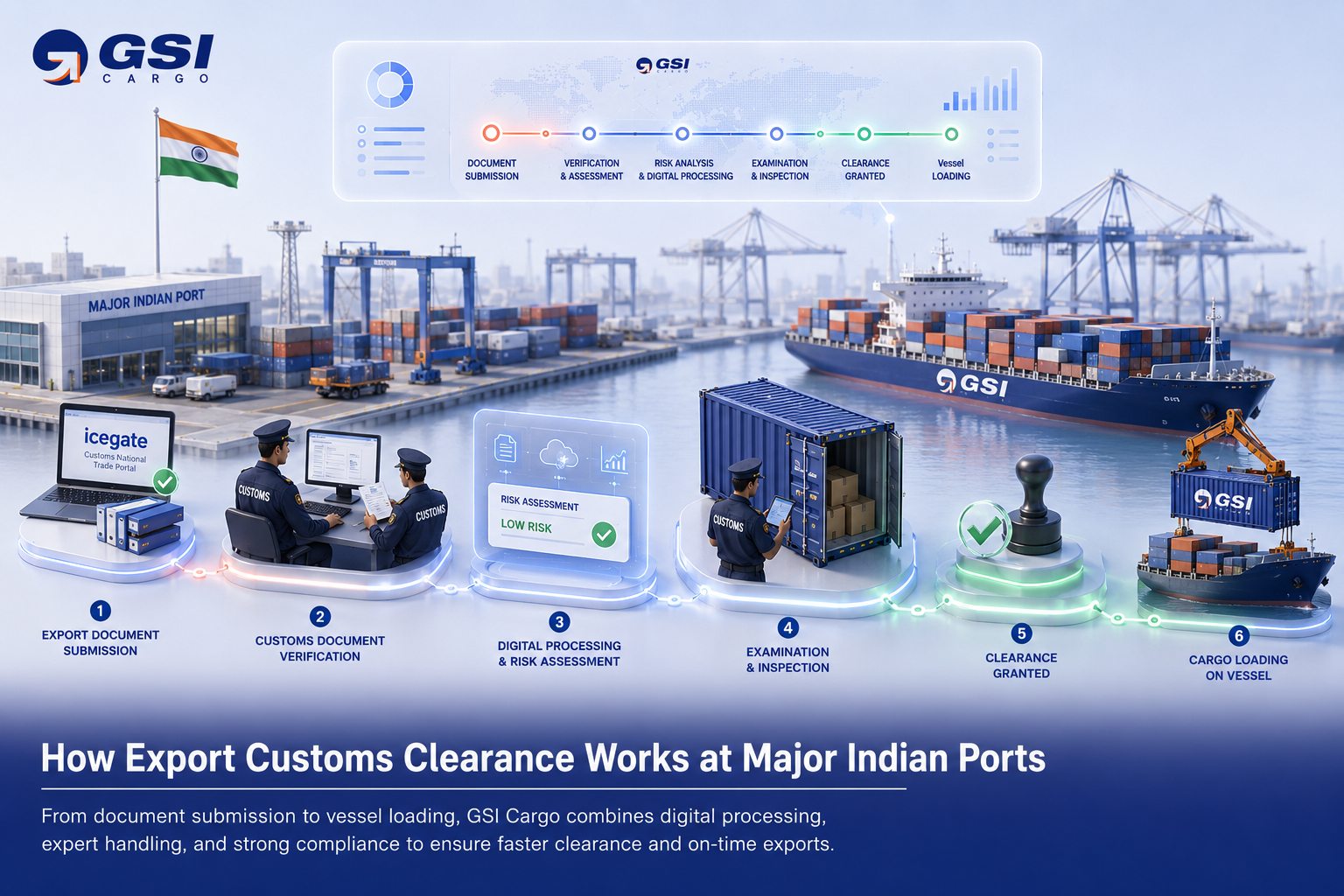
India is rapidly emerging as a global manufacturing hub for engineering goods, machinery, electronics, textiles, pharmaceuticals, and many other products. As international demand for Indian products continues to grow, thousands of businesses are exploring export opportunities for the first time. However, many entrepreneurs hesitate because export procedures appear complicated and documentation requirements seem overwhelming.
At GSI Cargo, we believe exporting should not be intimidating. With the right guidance and professional support, businesses can confidently enter international markets. Our team provides complete handholding—from obtaining export registrations to customs clearance and international logistics—making the export journey simple and efficient.
One of the most important stages of international trade is Export Customs Clearance. It is the process through which Indian Customs verifies that export shipments comply with all legal, regulatory, and documentation requirements before the goods are permitted to leave India. A small documentation error can delay shipments, increase storage costs, and affect customer relationships. Understanding this process helps exporters avoid unnecessary risks.
Before accepting any export order, exporters should carefully decide the appropriate Incoterms®. While exporters understand their product costs, they must also evaluate which delivery terms best suit their business. If quotations include freight charges under terms such as CIF or CFR, freight rates should always be quoted with a clear validity period. International freight prices can fluctuate significantly, and failing to account for these changes may reduce profit margins or even result in financial losses.
Payment security is another critical aspect of exporting. GSI Cargo recommends that exporters negotiate favorable payment terms wherever possible. Ideally, exporters should obtain at least 30% advance payment when confirming an order and collect the remaining amount before dispatch or against the Bill of Lading. This approach minimizes financial risk and improves cash flow.
Export credit insurance is equally important. Exporters should consider obtaining insurance through the Export Credit Guarantee Corporation of India (ECGC). Such coverage protects businesses against payment defaults, buyer insolvency, political risks, and order cancellations, providing greater confidence while expanding into new international markets.
Quality assurance should never be overlooked. If overseas buyers require product testing or inspection, exporters should complete the necessary quality certifications before shipment. Certified products reduce the chances of disputes, rejections, or claims after the goods arrive at the destination, strengthening long-term customer relationships.
Proper documentation forms the backbone of successful customs clearance. Essential export documents include the Commercial Invoice, Packing List, Shipping Bill, Certificate of Origin, and other documents required for specific products or destination countries. Where applicable, exporters should also obtain a REX Registration Number to enable buyers to claim preferential duty benefits under eligible trade agreements.
For first-time exporters, obtaining statutory registrations can often be confusing. GSI Cargo assists businesses with obtaining an Importer Exporter Code (IEC) from DGFT, registering the AD Code with Customs, and completing all mandatory export registrations. We also provide guidance on export documentation, customs procedures, compliance requirements, and logistics planning.
At GSI Cargo, our objective is not only to move cargo but also to empower Indian businesses to become successful global exporters. Through expert consultation, customs compliance, freight solutions, and end-to-end logistics support, we simplify the export process so businesses can focus on growing their international markets with confidence.
Also Read : Future of International Freight Forwarding in India